Occupational Therapy

Doctorate

The School of Science and Technology

The Occupational Therapy Doctorate (OTD) program at Quincy University prepares students to become skilled, compassionate occupational therapists who help individuals of all ages live meaningful, independent lives. Students learn how to evaluate physical, cognitive, and emotional challenges and design evidence-based interventions that support participation in daily activities.

Occupational Therapy professor working with student on swing

Opportunities & Outcomes

Inspired by Quincy University’s Catholic Franciscan values, the OTD program is built on service, ethical practice, and respect for the dignity of every person. Through rigorous coursework, hands-on laboratory learning, and immersive fieldwork experiences, students gain the clinical expertise, leadership ability, and professional confidence to thrive in a wide range of healthcare and community settings.

More than an academic pathway, Quincy University’s OTD program is a commitment to excellence, compassion, and meaningful change. We invite prospective students, faculty, and community partners to join us in advancing the future of occupational therapy through innovation, leadership, and advocacy.

Career Pathways

Graduates of the Occupational Therapy Doctorate are prepared for advanced clinical practice, leadership, and innovation across healthcare, education, and community-based environments.

Clinical Occupational Therapy Practice

  • Occupational therapist (OTR/L)*
  • Pediatric occupational therapist
  • Adult or geriatric occupational therapist
  • Rehabilitation or acute care occupational therapist

*Licensure, certification, and accreditation requirements apply.

Specialized Practice Areas

  • Hand therapy or upper extremity rehabilitation*
  • Mental health or behavioral health occupational therapy
  • Neurorehabilitation or brain injury therapy
  • School-based occupational therapy

*Licensure, certification, and accreditation requirements apply.

Healthcare & Community Settings

  • Hospitals and rehabilitation centers
  • Outpatient clinics and private practices
  • Schools and early intervention programs
  • Long-term care, home health, or community agencies

Leadership, Education & Program Development

  • Clinical or program director
  • Occupational therapy educator or fieldwork coordinator*
  • Program development or community health leader
  • Quality improvement or outcomes specialist

*Licensure, certification, and accreditation requirements apply.

Research, Advocacy & Innovation

  • Clinical or applied research roles
  • Policy, advocacy, or accessibility consultant
  • Assistive technology or adaptive design specialist
  • Community-based program innovator


Programs of Study Offered

  • Doctor of Occupational Therapy

Program Details

Program Mission, Vision, and Philosophy

Program Mission

The Occupational Therapy Doctorate (OTD) program at Quincy University is dedicated to cultivating compassionate servant leaders who are committed to advancing health, wellbeing, and participation through the transformative power of occupation. Rooted in the values of integrity, service, and respect, our graduates will be innovative, evidence-driven professionals equipped to meet the evolving needs of individuals and communities. We inspire a commitment to lifelong learning and professional excellence, empowering our students to be advocates for social and occupational balance, and advancing the field of occupational therapy with a focus on holistic, client-centered care.

Program Vision

The OTD program at Quincy University will be a leader in innovative and excellent occupational therapy education, preparing graduates to lead with compassion, integrity, and a commitment to transforming lives through the power of occupation.

Statement of Program Philosophy

The philosophy of the OTD program at Quincy University mirrors the current AOTA Philosophy of Occupational Therapy (Taft et al., 2017), recognizing occupation as fundamental to health, well-being, and participation in life (Christiansen et al., 2024). We believe that human beings are complex, dynamic individuals whose engagement in meaningful activities is essential to the promotion of health and quality of life. Through the therapeutic use of occupations, we aim to support our clients’ ability to adapt, function, and thrive in their environments (AOTA, 2020). Our fundamental belief about human learning is that individuals learn best through active participation and reflection. Learning is a lifelong process shaped by experiences, relationships, and engagement in real-world contexts (Fink, 2013). Therefore, the program emphasizes experiential learning opportunities, fostering students’ professional development as reflective practitioners who can synthesize knowledge, skills, and values in diverse settings.

References

American Occupational Therapy Association. (2020). Occupational therapy practice framework: Domain et process (Vol. 74, No. 7412410010). Bethesda, MD, USA: American Occupational Therapy Association. Christiansen, C. H., Bass, J., & Baum, C. M. (2024). Occupational therapy: Performance, participation, and well-being. Taylor & Francis.

Curriculum Overview

Designed for those who want to lead with heart, learn with intention, and practice with purpose.

  • Duration: 8 semesters (2 2/3 years), 107 credit hours
  • Structure: Full-time, year-round program
  • Delivery: Online coursework + on-campus immersion labs
  • Format: Each 16-week semester divided into two mini-mesters
Student Learning Outcomes

Occupational Therapy professor working with children in the classroom at Quincy University. At the end of the OTD program at Quincy University students will:

  • Develop a robust professional identity aligned with OT core values.
  • Integrate evidence-based and occupation-centered care in interprofessional settings.
  • Engage in ethical, reflective, and client-centered practice.
  • Lead and advocate for community health and occupational justice.
Student On-Site Summit Lab Dates

As part of Quincy University’s hybrid OTD program, the Hawk OTD Summit Labs are required on-campus experiences that provide hands-on learning, simulations, and professional development. These are the tentative dates to help with planning. More details will follow soon, including housing options and free transportation from the St. Louis airport (STL). We’re excited to welcome you to campus!

  • January 20 – 24, 2026
  • March 9 – 13, 2026
  • May 18 – 22, 2026
  • June 25 – 29, 2026
  • August 24 – 28, 2026
  • October 5 – 9, 2026
  • January 19 – 23, 2027
  • March 6 – 13, 2027
  • May 17 – 21, 2027
  • June 24 – 29, 2027
  • August 23 – 27, 2027
  • Sept 13 – Dec 3, 2027 – level II FW
  • January 18 – 22, 2028
  • February 14 – May 10, 2028 – level II FW
  • May 8 – August 11, 2028 – capstone
  • August 14 – 17 – presentations/graduation


What to Expect With Summit Labs

Expectations

Each Summit Lab is designed to bring your online coursework to life. During these intensive sessions, you will:

  • Apply clinical reasoning through simulation-based and hands-on activities
  • Build competence with therapeutic tools, assessments, and interventions
  • Engage in team-based learning and interprofessional collaboration
  • Receive individualized feedback from experienced faculty and field practitioners
  • Strengthen your identity as a future occupational therapist through occupation-centered practice
  • Complete team building and service activities
  • Summit Labs are intentionally sequenced across the curriculum to match the developmental level of the student—from foundational skills to advanced practice and capstone dissemination.

Summit Lab Format

  • Duration: 4 – 8 days per lab experience (held the first week and 7th week of each semester)
  • Schedule: Full-day immersive learning, typically 8:00 a.m. – 5:00 p.m.
  • Location: Quincy University’s state-of-the-art Health Sciences Labs
  • Activities: Skill labs, presentations, case-based learning, assistive technology exploration, clinical simulations, entrepreneurship in OT, and more
Doctoral Capstone Highlights

Each student completes a 14-week capstone experience and project focused on an area of passion and practice innovation. Supported by a faculty mentor and a community partner, students develop, implement, and disseminate a project that contributes to the profession and addresses community-identified needs.

Capstone areas may include:

  • Program development
  • Advocacy and policy
  • Education and training
  • Emerging practice areas
  • Research and scholarship
  • Students must complete 24 weeks of Level II fieldwork and an individual 14-week capstone experience within 24 months following the completion of the didactic portion of the program. The doctoral capstone experience must be started after completion of all coursework, Level II fieldwork and preparatory activities defined in 2023 ACOTE OTD Standard D.1.3.
Accreditation

The entry-level occupational therapy doctoral degree program has applied for accreditation and has been granted Candidacy Status by the Accreditation Council for Occupational Therapy Education (ACOTE) of the American Occupational Therapy Association (AOTA), located at 7501 Wisconsin Avenue, Suite 510E, Bethesda, MD 20814. ACOTE’s telephone number c/o AOTA is (301) 652-AOTA and its web address is www.acoteonline.org. The program must have a pre-accreditation review, complete an on-site evaluation, and be granted Accreditation Status before its graduates will be eligible to sit for the national certification examination for the occupational therapist administered by the National Board for Certification in Occupational Therapy (NBCOT). After successful completion of this exam, the individual will be an Occupational Therapist, Registered (OTR). In addition, all states require licensure to practice; however, state licenses are usually based on the results of the NBCOT Certification Examination. A felony conviction may affect a graduate’s ability to sit for the NBCOT certification examination or attain state licensure.

Faculty Spotlight

Jaime Garafalo, OTD, OTR/L

Jaime Garafalo, OTD, OTR/L

Academic Fieldwork Coordinator, Associate Professor of Occupational Therapy

Paula J. Costello, OTD, OTR/L

Paula J. Costello, OTD, OTR/L

Doctoral Capstone Coordinator, Associate Professor of Occupational Therapy

Asfia Mohammed, EdD, MOT, OTR

Asfia Mohammed, EdD, MOT, OTR

Assistant Professor of Occupational Therapy

Trevor St. Clair, OTD, OTR/L

Trevor St. Clair, OTD, OTR/L

Associate Professor of Occupational Therapy

Social

Contact

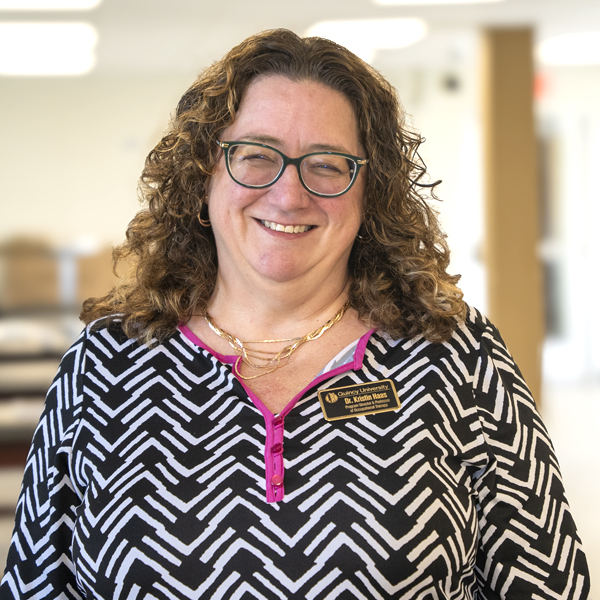
Dr. Kristin Haas, Professor and Founding Program Director
1800 College Ave
Quincy, IL 62301
217-228-5432
occupationaltherapy@quincy.edu

Amy K. Stollberg, M.Ed
Associate Dean of Transfer and Graduate Admissions
Francis Hall Room 111
217-228-5212
stollam@quincy.edu


Kristin Haas OTD, OTR/L

Kristin Haas OTD, OTR/L

Program Director, Professor of Occupational Therapy

Amy Stollberg MEd

Amy Stollberg MEd

Associate Dean of Transfer and Graduate Admissions

Degree Requirements

Doctorate

Take the Next Step