
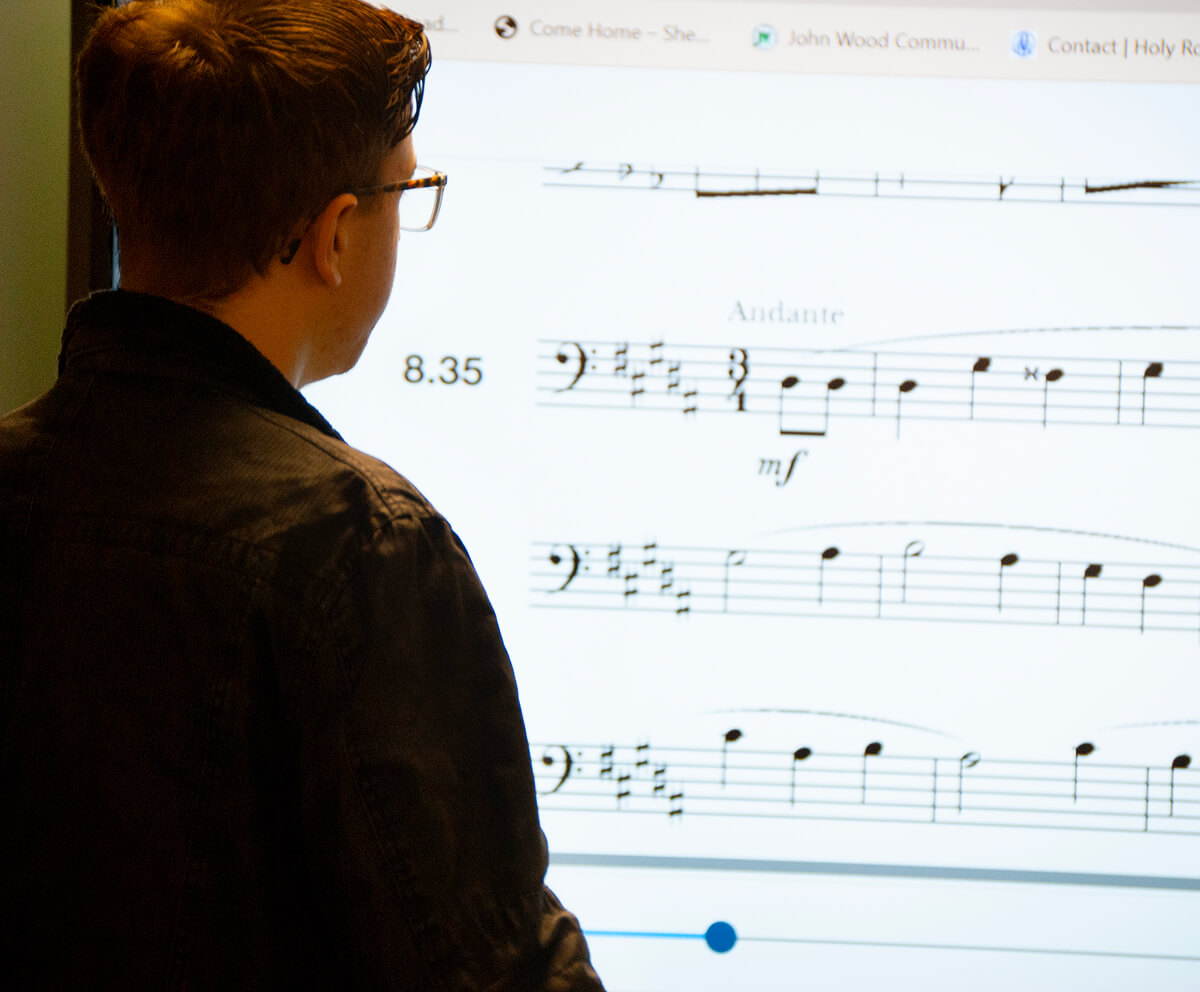
Opportunities & Outcomes
Through performance opportunities, hands-on teaching experiences, and faculty mentorship, students are prepared to lead music classrooms and programs with skill and purpose.
Career Pathways
A Music Education degree prepares students for teaching and leadership roles in schools and community settings, as well as for graduate study.
K–12 Music Education
- Elementary music teacher*
- Middle or high school band director*
- Choir director*
- General music educator*
Private & Community Music Instruction
- Private music instructor
- Studio or lesson program director
- Community music school educator
- Youth ensemble or program leader
Faith-Based & Community Leadership
- Church or worship music director
- Parish or faith-based music educator
- Community choir or ensemble director
- Nonprofit or outreach music program coordinator
Arts Administration & Program Support
- Arts or music program coordinator
- Education or outreach assistant for arts organizations
- Performance or ensemble manager
- Youth arts program administrator
Graduate & Professional Pathways
- Graduate study in music education or music performance
- Curriculum and instruction or educational leadership programs
- Graduate study in conducting, music theory, or pedagogy
*Teacher licensure and certification requirements apply.
Programs of Study Offered
- Bachelor of Science in Music Education with a Instrumental Music Concentration
- Bachelor of Science in Music Education with a Vocal Music Concentration
- Music Education Minor