
Doctorate of Physical Therapy

Doctorate Degree

The School of Science and Technology

The Doctor of Physical Therapy (DPT) program at Quincy University prepares students to become skilled, compassionate physical therapists who help people move, heal, and live active lives. Students learn to evaluate movement, diagnose physical impairments, and design evidence-based treatment plans that restore function and improve quality of life.

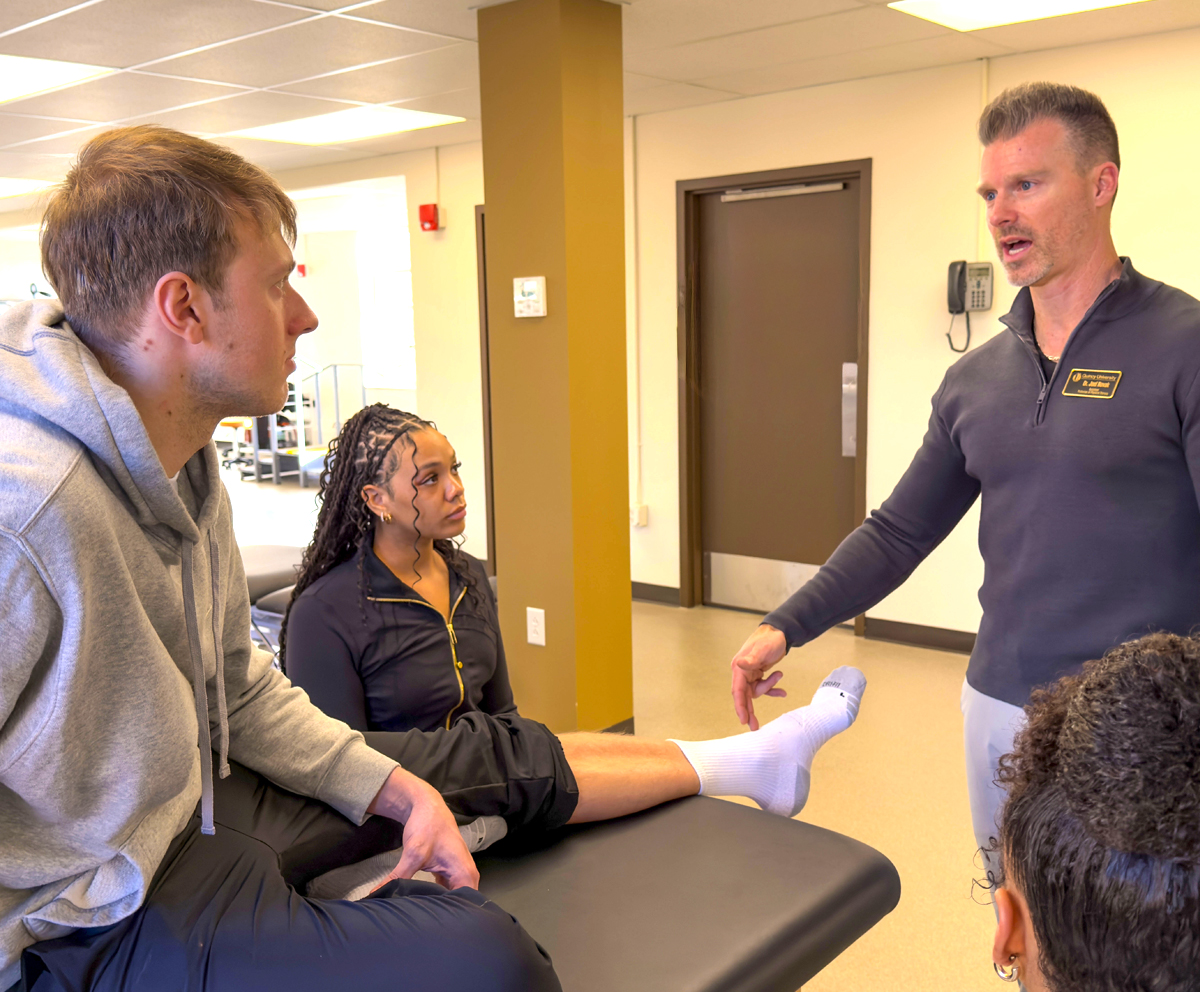
Physical therapist talking to a student who is sitting on a table and point to his foot while another student watches

Opportunities & Outcomes

Grounded in Quincy University’s Catholic Franciscan values, the program emphasizes ethical practice, service, and respect for human dignity. Through rigorous coursework, hands-on laboratory learning, and extensive clinical experiences, graduates develop the clinical expertise, critical thinking, and professional confidence needed for successful practice in a variety of settings.

Career Pathways

Graduates of the Doctor of Physical Therapy program are prepared for licensure and professional practice across diverse healthcare environments.

Clinical Physical Therapy Practice

  • Licensed physical therapist (PT)*
  • Orthopedic physical therapist
  • Sports or athletic physical therapist
  • Neurological or geriatric physical therapist

Healthcare & Rehabilitation Settings

  • Hospitals and medical centers
  • Outpatient and private physical therapy clinics
  • Rehabilitation and specialty centers
  • Home health and long-term care facilities

Specialized Practice Areas

  • Pediatric physical therapy
  • Cardiopulmonary or acute care physical therapy
  • Women’s health or pelvic health physical therapy*
  • Balance, mobility, and fall prevention programs

Leadership, Education & Advancement

  • Clinical supervisor or director
  • Physical therapy educator or clinical instructor
  • Program development or healthcare leadership roles
  • Research, outcomes, or quality improvement positions

Research, Advocacy & Professional Growth

  • Clinical or applied research roles
  • Health policy, advocacy, or community wellness leadership
  • Professional specialization or residency programs

Programs of Study Offered

  • Doctor of Physical Therapy (DPT)

Charter Scholarship

Members of our charter class (starting August 2026) are eligible to receive a $10,000 scholarship to offset the total cost of the DPT program. Contact us today for more information. physicaltherapy@quincy.edu

Program Details

Quincy University’s Hybrid Doctor of Physical Therapy Program welcomes motivated students who are ready to make a difference in the lives of others. Admission pathways are available for both traditional graduate applicants and high-achieving incoming freshmen through our Direct Admit option.

Program Length is 29 months (7 semesters, full-time). The first cohort is planned to begin in August 2026 and complete in December 2028. Enrollment in the Doctor of Physical Therapy Program will begin only after Quincy University has been granted Candidate for Accreditation status by the Commission on Accreditation in Physical Therapy Education (CAPTE).

Curriculum Overview

The Quincy University Doctor of Physical Therapy (DPT) program is a 29-month, seven-semester, full-time hybrid curriculum. Students engage in online coursework, intensive lab immersions in Quincy, IL, and more than 30 weeks of full-time clinical education. The curriculum progresses from foundational sciences to integrated patient management to immersive clinical practice. The first cohort is planned to begin in August 2026 and complete in December 2028 .

  • Year 1: Foundational sciences (Anatomy, Kinesiology, Pathophysiology), professional practice, and early rehabilitation courses in musculoskeletal, neuroanatomy, and cardiopulmonary care. Touchstone Seminars begin, helping students integrate knowledge across courses.
  • Year 2: Advanced systems management, evidence-based practice, imaging and diagnostics, neurologic management series, pediatric care, and the first full-time clinical experience. Students deepen the integration of classroom learning with clinical application.
  • Year 3: Final full-time clinical rotations, complex patient care, a capstone project, and licensure preparation, culminating in readiness for entry-level practice.
Technology Requirements

Because of the hybrid design of the program, students must have consistent access to:

  • A personal computer meeting DPT program specifications
  • Current versions of required software
  • Reliable high-speed internet connectivity

All technology-related expenses are the student’s responsibility. Maintaining adequate hardware and connectivity is essential to academic success and progression.

Accreditation

Quincy University is developing a Doctor of Physical Therapy program and is seeking accreditation from the Commission on Accreditation in Physical Therapy Education (CAPTE), 3030 Potomac Ave., Suite 100, Alexandria, Virginia 22305-3085; phone: 703-706-3245; email: accreditation@apta.org.

Submission of an Application for Candidacy does not assure that the program will be granted Candidate for Accreditation status.

Enrollment in the Doctor of Physical Therapy Program will begin only after Quincy University has been granted Candidate for Accreditation status by the Commission on Accreditation in Physical Therapy Education (CAPTE).

Complaints Policy

Individuals who have concerns or complaints about the program may follow Quincy University’s internal complaint procedure due process which can be found in the student handbook.

Complaints that fall outside of due process should be directed to Dr. Don Hoover, Physical Therapy Program Director, at d.hover23@quincy.edu. Retaliation following complaint submission is prohibited.

The Commission on Accreditation in Physical Therapy Education (CAPTE) also considers complaints about programs related to compliance with CAPTE standards. Such complaints should be directed to: CAPTE, 3030 Potomac Ave., Suite 100, Alexandria, VA 22305-3085; phone: 703-706-3245; email: accreditation@apta.org


Professional Licensure Disclosure

The Quincy University Doctor of Physical Therapy program is designed to meet the educational requirements for licensure as a physical therapist in all U.S. states and territories. Licensure requirements vary by state, and students are responsible for reviewing the specific requirements of the state in which they plan to practice.

Social

Factulty Spotlight

Dr. Christina Dehoff

Dr. Christina Dehoff

Director of Clinical Education and Assistant Professor of Physical Therapy

Jacklyn Malt, BS,PT,MS,PhD

Jacklyn Malt, BS,PT,MS,PhD

Assistant Professor of Physical Therapy

Toni Judge, PT, DPT, PhD, NCS

Toni Judge, PT, DPT, PhD, NCS

Assistant Professor of Physical Therapy
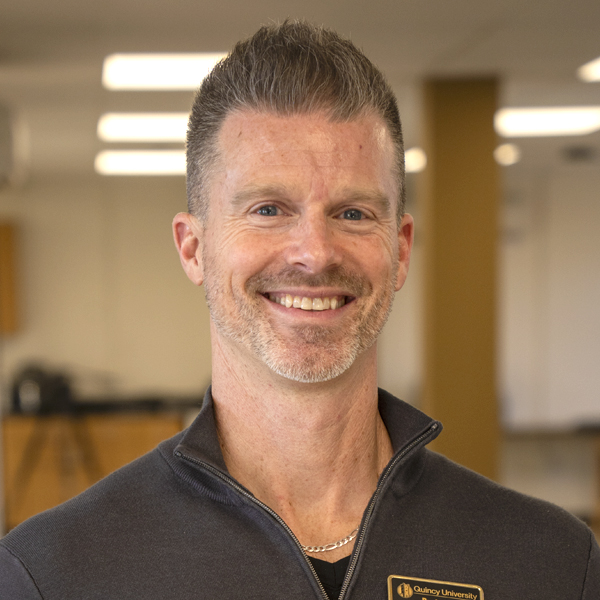
Joel Novak, PT, DPT, CSCS

Joel Novak, PT, DPT, CSCS

Assistant Professor of Physical Therapy

David Cox, PT, DPT, NCS

David Cox, PT, DPT, NCS

Assistant Professor of Physical Therapy

Contact

Don Hoover, PT, PhD, CSCS
Program Director and Professor of Physical Therapy
1800 College Ave
Quincy, IL 62301
217-228-5432
physicaltherapy@quincy.edu

Amy K. Stollberg, M.Ed
Associate Dean of Transfer and Graduate Admissions
Francis Hall Room 111
217-228-5212
stollam@quincy.edu


Don Hoover, PT, PhD, CSCS

Don Hoover, PT, PhD, CSCS

Program Director & Professor of Physical Therapy

Amy Stollberg MEd

Amy Stollberg MEd

Associate Dean of Transfer and Graduate Admissions

Degree Requirements

Doctorate

Take the Next Step